Showing posts with label Working procedure of combing machine. Show all posts
Showing posts with label Working procedure of combing machine. Show all posts
Tuesday, February 2, 2021
Friday, January 15, 2021
PRODUCTION CALCULATION OF SLIVER LAP/ RIBBON LAP / LAP FORMER MACHINE

Please click on the below video link to watch the full topic in Hindi:
Monday, January 11, 2021
Wednesday, January 6, 2021
COMBER MACHINE PRODUCTION CALCULATION


Sunday, February 23, 2020
WORKING PROCEDURE OF COMBING MACHINE AND FEED STOCK PREPARATION METHOD
कृपया इस आर्टिकल को हिंदी में पढने के लिए नीचे दिए गए लिंक पर क्लिक करें:
WORKING PROCEDURE OF COMBING MACHINE:
The working procedure of a combing machine can be understood in the following steps:


• First of all the lap roller is mounted onto the roller stand.
• The lap feed, first of all, passes under the feed roller. The feed roller helps to move forward the lap sheet by a small amount of 4.3 – 6.7 mm. When the lap sheet moves forward the nippers are opened and get ready to receive the feed.
• As soon as feeding action gets completed, the upper nipper plate starts to lower on the bottom nipper plate. These nipper plates help to grip the lap sheet firmly during the combing action.
• Now combing action gets started. The lap sheet comes into contact with the bottom comb mounted on the rotating cylinder. The saw teeth of comb sweep the lap sheet. It carries away the material which is not gripped by nipper plates (rotary comber).
• The nipper plates get opened again and move toward detaching rollers meanwhile detaching rollers have returned part of the previously drawn-off stock ( web) by means of reverse rotation so that the web protrudes from the back of the detaching device (web return). In the course of the forward movement of the nippers, the projecting fibre fringe is placed on the returned web (piecing).
• The detaching rollers start to rotate in the forward direction again and draw the gripped fibres out of the web held fast by feed rollers.
• Now upper comb comes into action and combs the trailing part of the fibres fringe.
• The detaching rollers acts and nipper plates open again to receive the next feeding. The upper comb goes back in its idle position and a new combing cycle gets started
• The brush cylinder helps to remove the impurities from the bottom comb and ejects them into an extractor that carries the noil away to a collecting filter system.
• All these mechanically very demanding processing steps are carried out on 8 combing heads simultaneously at speeds of up to 500 times per minute (in Rieter‘s current E 66 comber generation).
PREPARATION OF STOCK FOR COMBING:
The carded sliver cannot be used directly in the combing process due to its form and fibre arrangement in the carded sliver. If carded sliver gets fed to the comber, the nipper plates grip only high points of the sliver. There is always a risk of improper nipping of the less strongly compressed edge zones of the slivers. When combing action takes place, these fibres are pulled out as clumps by the bottom comb (cylinder comb).
This problem necessitates a cotton sheet with the highest possible degree of uniformity as a feed to the combing machine. The feed material requires the best fibre arrangement (fibre parallel to the length of the feed material). If the fibre arrangement in the feed material is not proper, unnecessary loss of long-staple fibres occurs too. Therefore a fibre sheet having a high degree of uniformity with the best parallel arrangement of fibres is used as feedstock in the combing process.
This problem necessitates a cotton sheet with the highest possible degree of uniformity as a feed to the combing machine. The feed material requires the best fibre arrangement (fibre parallel to the length of the feed material). If the fibre arrangement in the feed material is not proper, unnecessary loss of long-staple fibres occurs too. Therefore a fibre sheet having a high degree of uniformity with the best parallel arrangement of fibres is used as feedstock in the combing process.
Methods of preparation:
A machine having three pairs of drafting rollers and two pairs of calendar rolls is used to form a suitable lap for the combing machine.
In the conventional method of sliver lap/ribbon lap preparation, sixteen to thirty-two number of carded slivers are fed together to the lap preparation machine. This machine forms a lap having a linear density of 50 – 70 grams per metre and 230 – 300 mm. width. This lap is wrapped onto the lap roll. The diameter of the lap roll is around 500 mm. and its weight is 27.0 kg. A draft of 1.5 to 2.5 is used in the sliver lap machine.


Now, these prepared sliver laps are passed through the "ribbon lap machine". Normally ribbon lap machine consists of four heads. Each head processes a single sliver lap. Every thin sheet is led down over a curved plate. All the four thin sheets lead down together. This turns at right angles, inverts them and superimpose one upon the others. "The drafts used in the ribbon lapper are about four, so the weight per meter of the ribbon lap is about the same as that of the sliver lap".
THE SUPER LAP PREPARATION MACHINE:
This machine consists of 2/3 vertical drafting systems. In this machine around 20 drawing slivers are fed. The fed material is drafted three to five times. Three such types of units convert the drawn slivers into three thin sheets of fibres. These sheets are superimposed one over the other. Calander rolls press the final lap sheet.
This machine is only used in the manufacturing of a very fine count of yarn from extra-long staple fibres.
THE BREAKER DRAWING/LAP FORMING METHOD:
The breaker drawing/lap-forming method is very common for most combing operations. This method of lap preparation is useful to process the fibre length from medium to long-staple fibre. The whole process of lap preparation in this method completes in two steps:
Drawing process:
A standard drawing process is used in this method of lap preparation. 20 – 24 number of carded slivers are fed together. After drafting a drawn sheet of sliver results.
A standard drawing process is used in this method of lap preparation. 20 – 24 number of carded slivers are fed together. After drafting a drawn sheet of sliver results.
Lap winding process:
Now, this drawn sheet is wound onto the lap roller. The linear density of the lap varies between 50 to 70 grams per metre.
Now, this drawn sheet is wound onto the lap roller. The linear density of the lap varies between 50 to 70 grams per metre.
Please click on the below video link to watch the full article in Hindi:
You may also be interested in following articles:
Objectives of carding process
Objectives of mixing and blow room
Objectives of drawing ( draw frame process)
Cotton spinning process chart
Yarn count conversion from one to another system
Yarn count or yarn fineness ( Linear density of a yarn
You may also be interested in below sponsored links:
Objectives of carding process
Objectives of mixing and blow room
Objectives of drawing ( draw frame process)
Cotton spinning process chart
Yarn count conversion from one to another system
Yarn count or yarn fineness ( Linear density of a yarn
Saturday, February 22, 2020
PARAMETERS OF COMBING PROCESS
PARAMETERS OF COMBING PROCESS:
The main factors affecting the combing process are given below:
1 - Quality of feed preparation:
The quality of preparation of feed( lap) greatly affects the performance of the combing process. The man quality parameters of feed ( lap) are given below:
The quality of preparation of feed( lap) greatly affects the performance of the combing process. The man quality parameters of feed ( lap) are given below:
Degree of evenness of sheet:
The preparation of the lap sheet requires very high careness during this process. The lap sheet is prepared uniform (i uniform) width. The uniform width of the lap sheet helps to achieve the maximum gripping of the lap sheet between nipper plates. The lap's evenness results in the form of better clamping of the lap sheet between the nippers. The improved evenness gets increased by using more doublings in the web form like a ribbon lap machine.
Orientation of fibre hooks in the sheet:
The lap sheet gets fed to the comber in the correct direction. The correct feeding direction helps to minimise the loss of the good fibre in waste percentage. The trailing hooks present in the lap sheet are fed to the comber in such a direction so that these are changed into leading hooks. The correct direction of feeding also affects the cleanliness and the opening of hooks. If the lap gets fed Incorrectly in the combing machine, it results in the form of an increase in neps percentage in the yarn to be spun. The long and fine fibres always contain more hooks than short and coarse fibres. As the fibres get long and fine, the importance of the hooks gets increases.
Degree of parallelisation of fibres in the sheet:
1 - The degree of parallelisation of fibres in the lap is a very important parameter in the combing process.
2 - The optimum degree of parallelisation is achieved during the preparation of feedstock to the comber.
3 - The waste percentage is reduced by achieving the optimum degree of parallelisation.
4 - The over parallelisation of fibres creates problem of lap licking.
5 - The mutual separation of layers within the sheet lowers due to fibre to fibre adhesion force in over parallelised lap sheet.
6 - The retaining capacity of the over parallelised lap sheet is decreased up to great extent. This low retaining capacity of the lap sheet, it is not able to hold back the neps as it usually does.
7 - Some of these neps also pass through the top comb. Neppiness of the web is increased.
8 - The sheet does not hold together well due to the over parallelisation of fibres in the lap sheet. Over degree of parallelisation leads to an increase in the hairiness of the lap.
2 - The optimum degree of parallelisation is achieved during the preparation of feedstock to the comber.
3 - The waste percentage is reduced by achieving the optimum degree of parallelisation.
4 - The over parallelisation of fibres creates problem of lap licking.
5 - The mutual separation of layers within the sheet lowers due to fibre to fibre adhesion force in over parallelised lap sheet.
6 - The retaining capacity of the over parallelised lap sheet is decreased up to great extent. This low retaining capacity of the lap sheet, it is not able to hold back the neps as it usually does.
7 - Some of these neps also pass through the top comb. Neppiness of the web is increased.
8 - The sheet does not hold together well due to the over parallelisation of fibres in the lap sheet. Over degree of parallelisation leads to an increase in the hairiness of the lap.
Linear density of fibre sheet:
The retaining capacity of the fibres results in self-cleaning of the lap during the combing process. A thick lap sheet shows better retaining capacity than a thin lap sheet. The effective gripping of nippers gets obtained with a thick lap sheet up to the certain limit.
The thick sheet has a negative effect also. A thick lap sheet develops much load to the comb, thus leading to uncontrolled combing.
The thick sheet has a negative effect also. A thick lap sheet develops much load to the comb, thus leading to uncontrolled combing.
Comber waste percentage:
The higher comber waste percentage results in form of low imperfection in the yarn to be produced. The strength and other quality parameters are improved up to the certain limit of waste percentage. further increase in waste percentage results in quality deterioration.
Machine setting:
Following machine settings parameters affect the quality and performance of combing machine:
Feed length:
The feed length has a direct effect on production rate, waste percentage and quality of combing. The production rate gets increased by increasing feed length but at the same time quality deterioration takes place. The feed length is kept low to achieve higher quality requirements. The staple length of fibre also decides the feed length in the combing process.
Effect of type of feeding used in combing machine:
There are two types of feeds in combing machine:
Forward feed (concurrent feed):
The feed of the sheet into the nippers occurs while the nippers move towards the detaching roller
Backward feed (counter-feed):
The feed of the sheet occurs during the return of the nippers In backward feed, the cylinder comb combs through the fibres more often than in forwarding feed, Therefore, the elimination of impurities and neps is always good. However, the difference is usually undetectable in modern high-performance combers of the latest generation.
Detachment setting:
The distance between the bite of the nippers and the nip of the detaching rollers is called detaching length. The detaching length has a direct influence on the waste percentage. The waste percentage in combing gets increased when the detaching length increases.
Point density of combs:
The needles of the top comb have a flattened cross-section. The point density of the upper comb ranges from 22 to 32 needles per centimetre. The more number of needles per unit length in the comb results in the form of an increase in waste percentage.
Depth of penetration of top comb:
The depth of penetration of the top comb also affects the comber waste percentage. If the comb depth is increased by 0.5mm, approximately a 2% increase in waste occurs. When the depth is increased, the main improvement in quality is seen in Neps. Over deep penetration of top comb disturbs fibre movement during piecing which deteriorates the quality.
Piecing:
Since the web from detaching roller is intermittent because of the intermittent functions like feeding, combing and detaching, to have a continuous web from the comber, fibre fringes are laid on the top of each other in the same way as roofing tiles. This process is called Piecing. This is a distinct source of the fault in the operation of rectilinear Combing. The sliver produced in this way exhibits a periodic variation.
Influence of combing operation on quality:
The combing can be applied to a wide range of spinning processes. The classification of quality of combed yarns can be classified as below:
• Semi-combed yarn:
The upgraded higher quality of the yarn results in comparison to carded yarn. The noil percentage in this yarn ranges between 5 - 10 %.
The upgraded higher quality of the yarn results in comparison to carded yarn. The noil percentage in this yarn ranges between 5 - 10 %.
• Normally combed yarn:
It is a better quality yarn in comparison to semi-combed yarn. The noil percentage in this yarn ranges between 11 - 20 %.
It is a better quality yarn in comparison to semi-combed yarn. The noil percentage in this yarn ranges between 11 - 20 %.
• Super combed yarn:
It is the best quality yarn in comparison to semi-combed and normally combed yarn. The noil percentage goes over 20% in this yarn.
It is the best quality yarn in comparison to semi-combed and normally combed yarn. The noil percentage goes over 20% in this yarn.
Combers Noil:
The wastage which is removed from the comber m/c during processing is known as comber’s noel. It is expressed as a percentage. It is mainly of short fibres and naps. The noil is used for the lower count as raw material.
You may also be interested in the following articles:
Process parameters of blow room assembly
Carding process parameters
Draw frame process parameters
Objectives of carding process
Fabric pilling test by Tumble type pilling tester
The wastage which is removed from the comber m/c during processing is known as comber’s noel. It is expressed as a percentage. It is mainly of short fibres and naps. The noil is used for the lower count as raw material.
You may also be interested in the following articles:
Process parameters of blow room assembly
Carding process parameters
Draw frame process parameters
Objectives of carding process
Fabric pilling test by Tumble type pilling tester
Sunday, February 9, 2020
COMBING PROCESS ( A SPINNING PROCESS)
कृपया इस आर्टिकल को हिंदी में पढ़ने के लिए नीचे दिए गए लिंक पर क्लिक करें:
COMBING PROCESS ( A SPINNING PROCESS):
“ The combing is a process which eliminates the short fibres, impurities, naps, immature fibres from the sliver, straightens the fibres and make them parallel along the sliver length”. The combing process has special importance in the yarn manufacturing process. The combing process provides extra quality advantages to the yarn. Very high strength, high degree of evenness, low hairiness, fewer naps % and lowest percentage of immature fibres in the yarn result after combing process. The combing is compulsory for achieving high quality of fine count of yarn. The combed yarn looks more lustrous than carded yarn. The combing process affects the yarn cost too. The manufacturing cost of yarn gets increased by around 10 - 15% after the combing process. The combing process is normally used in the manufacturing of cotton yarn only. The combed yarn is used to manufacture garments such as suiting, shirting, trousers, towels etcetera. Since the combing process eliminates short fibres from the sliver so that a big amount of waste results after the combing process. Around 12 – 25 % wastage of fibres occurs depending upon the material to be processed. This wastage is reused in the spinning of a coarse count of yarns.
OBJECTS OF COMBING PROCESS:
The main objectives of the combing process are given below:
Primary objectives of combing process:
• To remove the short fibres present in the sliver.
• To straighten the fibres.
• To make the fibres maximum parallel along the sliver length.
• To improve the uniformity of sliver.
Secondary objectives of combing process:
• To eliminate the dirt and dust present in the cotton.
• To maximize the cleanliness of the cotton.
• To maximize the cleanliness of the cotton.
• To make sliver free from foreign impurities like broken seeds and naps.
• To remove the immature fibres present in the sliver.
• To improve the visual appearance of yarn.
• To maximize the tensile strength of the yarn.
• To improve the lustre and smoothness of yarn.
• To improve the touch and feel of the yarn.
Please click on the below video link to watch the full article in Hindi:
Please click on the below video link to watch the full article in Hindi:
You may also interested in the following articles:
Parameters of combing process
Types of combing machine and common structure of combing machine
Yarn parameters or yarn specifications
Parameters of combing process
Types of combing machine and common structure of combing machine
Yarn parameters or yarn specifications
Subscribe to:
Posts (Atom)
Featured Post
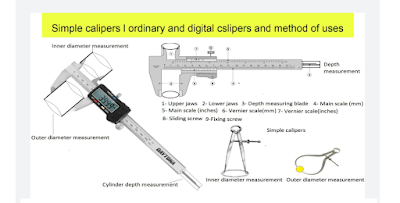
Simple calipers and vernier calipers, method of uses and calculations
Calipers: The calipers are very useful instruments. These instruments are used to measure the diameter of the cylinder, bore, bearing size, ...
-
 If you are searching for genuine hand woven, sustainable, and eco – friendly warm shawls, stoles, and scarves, the Himalayan weavers is off...
 -
 please click on the below link to read this article in Hindi यार्न की परिभाषा और यार्न के विभिन्न प्रकार या यार्न का वर्गीकरण VARIOUS TYPE...
 -
 CARDING: The carding is the second process of spinning which converts fed material (lap) into the uniform strand of fibres called “...
 -
 please click on the below link to read this article in Hindi एक सिस्टम से दूसरे सिस्टम में यार्न काउंट का रूपांतरण CONVERSION OF YARN COUN...