Showing posts with label corrected invoice weight of cotton fibre. Show all posts
Showing posts with label corrected invoice weight of cotton fibre. Show all posts
Friday, July 16, 2021
Wednesday, July 7, 2021
Corrected invoice weight of textile material
Corrected invoice weight of textile material:
When the yarn manufacturer purchases the fibres from the supplier and pays the price of fibres by weight, it is necessary to sign an agreement between buyer and supplier to generate an invoice of exact weight. Any buyer does not wish to pay for an excess amount of moisture present in the textile material. A correct invoice weight is therefore determined. When a consignment is delivered and weighed a sample is taken and tests made to enable the correct invoice weight to be calculated. First of all, dry-oven weight is found. This dry-oven weight may be determined either with or without cleaning the sample before taking it to constant weight in the drying oven.Suppose that
W = the weight of consignment at the time of samplingd = oven-dry weight of the sample ( either with or without cleaningS = original weight of the sampleC = oven-dry weight of the consignment

If a blended sample is considered, and the relative proportion of each component is known, the allowance can be calculated as below:
Example: If the blend is 80:20 cotton/nylon, the allowance will be calculated as below:

Please click on the below link to watch the full topic in Hindi:
You may also be interested in the below articles:
Testing of moisture regain and moisture content of cotton fibres
Wet and dry bulb hygrometer (a simple instrument for relative humidity test)
Importance of atmospheric conditions and relative humidity in the textile testing and standard atmospheric conditions
Yarn sampling method
Sampling method for cotton fibre properties:
EVALUATION OF COTTON FIBRE FINENESS
COTTON FIBRE LENGTH EVALUATION
BASIC CHARACTERISTICS AND PROPERTIES OF TEXTILE FIBRES
Cotton fibre fineness test by Shirley fineness tester
EVALUATION OF COTTON FIBRES MATURITY
Subscribe to:
Posts (Atom)
Featured Post
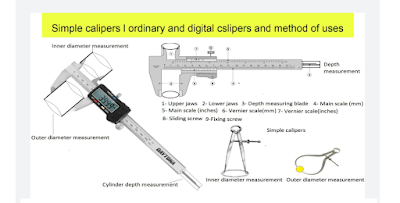
Simple calipers and vernier calipers, method of uses and calculations
Calipers: The calipers are very useful instruments. These instruments are used to measure the diameter of the cylinder, bore, bearing size, ...
-
 If you are searching for genuine hand woven, sustainable, and eco – friendly warm shawls, stoles, and scarves, the Himalayan weavers is off...
 -
 please click on the below link to read this article in Hindi यार्न की परिभाषा और यार्न के विभिन्न प्रकार या यार्न का वर्गीकरण VARIOUS TYPE...
 -
 CARDING: The carding is the second process of spinning which converts fed material (lap) into the uniform strand of fibres called “...
 -
 please click on the below link to read this article in Hindi एक सिस्टम से दूसरे सिस्टम में यार्न काउंट का रूपांतरण CONVERSION OF YARN COUN...