Showing posts with label cotton fibre fineness. Show all posts

Saturday, October 16, 2021

कपास( कॉटन) फाइबर की फाइननेस का परीक्षण (वायु प्रवाह विधि)

Please click on the below link to read this full article in English:

Cotton fibre fineness test by Shirley fineness tester

 कपास( कॉटन) फाइबर की फाइननेस  का परीक्षण (वायु प्रवाह विधि)

यार्न की विशेषताओं में फाइबर की  फाइननेस बहुत महत्वपूर्ण भूमिका निभाती है। यह काता जाने वाले यार्न की गुणवत्ता को सीधे प्रभावित करता है। तन्य शक्ति, धागे के हैरिनेस्स की  डिग्री, चमक, फील , और धागे की कोमलता फाइबर की  फाइननेस पर निर्भर करती है। रेशों का मूल्य भी रेशे की  फाइननेस के अनुसार निर्धारित होता है। यदि बल्क में मौजूद सभी रेशों का व्यास समान हो, तो रेशे की सूक्ष्मता आसानी से निर्धारित की जा सकती है। सूती रेशों के मामले में, विभिन्न तंतुओं के अलग-अलग व्यास होते हैं। रेशे का व्यास एक ही तंतु में भिन्न-भिन्न स्थानों पर भिन्न भी हो सकता है। यही कारण है कि हम रेशों के व्यास को ठीक-ठीक नहीं माप सकते।

फाइबर  फाइननेस:

फाइबर की प्रति यूनिट लंबाई के वजन को फाइबर की  फाइननेस कहा जाता है। आम तौर पर, इसे माइक्रोग्राम/इंच में मापा जाता है।

कपास के रेशों के बल्क में लाखों फाइबर मौजूद होते हैं। हम प्रत्येक फाइबर के प्रति इकाई लंबाई के वजन का निर्धारण नहीं कर सकते। यह कतई संभव नहीं है। बल्क में फाइबर की प्रति यूनिट लंबाई के औसत वजन को निर्धारित करने के लिए एक एयरफ्लो विधि का उपयोग किया जाता है।

फाइबर  फाइननेस परीक्षण की वायु प्रवाह विधि:

इस विधि को एक उदाहरण से समझा जा सकता है। मान लीजिए कि हम अलग-अलग रेशे की महीनता वाले दो रेशों को बराबर मात्रा में लेते हैं। हम उन्हें दो सिलेंडर में रखते हैं और उन्हें संपीड़ित करते हैं। अब हम दोनों नमूनों में से समान दाब पर वायु प्रवाहित करते हैं। यहाँ, हम देखते हैं कि महीन तंतुओं के माध्यम से वायु प्रवाह मोटे रेशों की तुलना में कम होता है। यह सब मोटे और महीन रेशों के कुल सतह क्षेत्रफल के अंतर के कारण होता है। महीन रेशों के मामले में, हवा को अधिक अवरोधों का सामना करना पड़ता है और इसलिए वायु प्रवाह दर कम हो जाती है।

अब, हम कह सकते हैं कि वायु प्रवाह दर और विशिष्ट सतह क्षेत्र एक दूसरे के व्युत्क्रमानुपाती होते हैं। यह विधि बहुत उपयोगी है और शीघ्र परिणाम देती है

शर्ले  फाइननेस परीक्षक द्वारा कपास फाइबर  फाइननेस परीक्षण:


उपकरण का इस्तेमाल किया:

1- शर्ले कपास फाइबर  फाइननेस परीक्षक

2- वजनी पैमाना

3- कपास के रेशे

नमूना तैयारी:

6 ग्राम प्लस या माइनस कॉटन का वजन सही ढंग से किया जाता है। यदि उपकरण के नए संस्करण का उपयोग किया जाता है तो नमूना वजन 5 ग्राम रखा जाता है। किसी भी उलझे हुए हिस्से को खत्म करने के लिए सैंपल को ठीक से फुलाया जाता है।

यदि शर्ले ट्रैश  विश्लेषक उपलब्ध हो जाता है, तो नमूना तौलने से पहले सामग्री को खोला जाता है, साफ किया जाता है और कचरा विश्लेषक की मदद से मिश्रित किया जाता है।

परीक्षण प्रक्रिया:

*सबसे पहले, नमूना बेलनाकार होल्डर A में पैक किया जाता है।

*अब नमूना छिद्रित प्लंजर P द्वारा स्थिर मात्रा में संकुचित होता है।

* इस स्तर पर प्रवाह नियंत्रण वाल्व V को बंद रखा जाता है।

*अब, एग्जॉस्ट पंप E की बिजली आपूर्ति चालू की जाती है। निकास पंप तुरंत हवा को चूसना शुरू कर देता है।

*वायु प्रवाह को प्रवाह नियंत्रण वाल्व V द्वारा नियंत्रित किया जाता है जब तक कि मैनोमीटर M इंगित नहीं करता है कि कपास के प्लग के अंत में पानी के 18 सेमी का दबाव अंतर मौजूद है।

*इस उपकरण के नए संस्करण को माइक्रोनेयर मूल्यों में कैलिब्रेटेड  पैमाने के साथ आपूर्ति की जाती है। फ्लो मीटर के शीर्ष की रीडिंग अब दर्ज की जाती है।

*यदि नए संस्करण का उपयोग किया जाता है, तो नमूने का वजन 5 ग्राम रखा जाता है।

*पुराने नमूने को हटाने और बेलनाकार होल्डर में नए नमूने को दोबारा पैक करने के बाद दोबारा अवलोकन किया जाता है।

*चार अलग-अलग नमूनों का परीक्षण किया जाता है और माध्य मान की गणना की जाती है। इस प्रकार अंतिम माइक्रोनेयर मूल्य निर्धारित किया जाता है

Friday, August 20, 2021

Cotton fibre fineness test by Shirley fineness tester


Please click on the below link to read this full article in Hindi:

कपास( कॉटन) फाइबर की फाइननेस का परीक्षण (वायु प्रवाह विधि)

 Cotton fibre fineness test (airflow method)


The fineness of fibre plays a very important role in yarn characteristics. It directly affects the yarn quality to be spun. The tensile strength, degree of yarn hairiness, lustre, feel, and softness of yarn depends upon the fibre fineness. The value of the fibres is also decided according to the fineness of a fibre. If all the fibres present in the bulk have a similar diameter, then the fibre fineness may be determined easily. In the case of cotton fibres, the different fibres have different diameters. The diameter of the fibre may even vary at different places in the same fibres. This is the reason why we cannot measure the diameter of the fibres accurately.

Fibre fineness:

The weight per unit length of fibre is termed the fineness of a fibre. Normally, it is measured in microgram/inch.

In the bulk of cotton fibres, there are millions of fibre present. We cannot be determined the weight per unit length of every fibre. It is not possible at all. An airflow method is used to determine the average weight per unit length of the fibres in the bulk.

Airflow method of fibre fineness test:

This method can be understood by an example. Suppose that we take an equal amount of two fibres having different fibre fineness. We keep those in two cylinders and compress them. Now we pass the air through both samples at equal pressure. Here, we observe that airflow through the fine fibres are less than coarse fibres. It all happens due to the difference between the total surfaces area of coarse and fine fibres. In the case of fine fibres, the air faces more obstructions and hence the airflow rate gets dropped.

Now, we can say that airflow rate and specific surface area is inversely proportional to each other. This method is very useful and gives quick result


Cotton fibre fineness test by Shirley fineness tester:

Apparatus used:

1- Shirley cotton fibre fineness tester

2- Weighing scale

3- Cotton fibres

Specimen preparation:

6 grams plus or minus cotton is weighed accurately. if the new version of the instrument is used the specimen weight is kept at 5 grams. The sample is fluffed properly to eliminate any tangled part.

If the Shirley trash analyser gets available, the material is opened, cleaned and blended with the help of a trash analyser before weighing the specimen.

Testing procedure:

*First of all, the specimen is packed in the cylindrical holder A.

*Now the specimen is compressed to a constant volume by perforated plunger P.

*The flow control valve V is kept closed at this stage.

*Now, the power supply of the exhaust pump E is switched on. The exhaust pump starts to suck the air immediately.

*The airflow is regulated by flow control valve V until the manometer M indicates that a pressure difference of 18cms of the water exists across the end of the plug of cotton.

*The new version of this instrument is supplied with the engraved scale in micronaire values. The reading of the top of the flow meter is recorded now.

*If the new version is used, the specimen weight is kept at 5 grams.

*A repeat observation is made after removing the old specimen and repacking a new specimen in the cylindrical holder.

*Four different specimens are tested and the mean value is calculated. Thus the final micronaire value is determined.


Please watch the below video to learn this topic in Hindi:


You may also be interested in the below articles:

COTTON FIBRE LENGTH EVALUATION:

Cotton fibre maturity evaluation

Corrected invoice weight of textile material

Wet and dry bulb hygrometer (a simple instrument for relative humidity test)

Testing of moisture regain and moisture content of cotton fibres

VARIOUS TYPES OF COTTON AND COTTON VARIETIES

Bt. COTTON AND ADVANTAGES OF Bt. COTTON

GENERAL TERMS TO BE USED IN TEXTILE

CHEMICAL COMPOSITION OF COTTON FIBRE, CHEMICAL FORMULA OF COTTON FIBRE, CROSS SECTIONAL VIEW OF THE COTTON FIBRE

BASIC CHARACTERISTICS AND PROPERTIES OF TEXTILE FIBRES


Wednesday, June 9, 2021

कपास के फाइबर की महीनता ( फाइननेस ) का मूल्यांकन ( Evaluation of cotton fibre fineness )

 कपास के  फाइबर की महीनता (  फाइननेस ) का मूल्यांकन:

कॉटन फाइबर की महीनता: 

 फाइबर की महीनता  हमें फाइबर के व्यास या फाइबर के क्रॉस सेक्शन के आयामों के बारे में बताती है। चूंकि कपास के रेशों में नियमित व्यास या क्रॉस-सेक्शनल आयाम नहीं होता है, इसलिए क्रॉस-सेक्शनल आयाम या व्यास को सटीक रूप से निर्धारित करना लगभग असंभव हो जाता है। फाइबर का प्रति इकाई बजन  मापा जाता है। "फाइबर की प्रति इकाई लंबाई के वजन या फाइबर के रैखिक घनत्व को फाइबर की महीनता  (  फाइननेस ) कहा जाता है"। फाइबर सूक्ष्मता माइक्रोग्राम/इंच की इकाई सामान्यतः प्रयोग की जाती है।                                                                 

कपास के रेशे की पतलेपन (  फाइननेस ) रेशे की एक बहुत ही महत्वपूर्ण विशेषता है। यह  कपास की किस्म से काते जाने वाले धागे की गुणवत्ता को सीधे प्रभावित करता है। यदि एक ही काउंट  के दो धागों को अलग-अलग रेशे की महीनता वाली दो कपास किस्मों का उपयोग करके काता जाता है, तो उल्लेखनीय अंतर उन धागों की ताकत, समरूपता और हेयरिनेस के बीच का होता है।

हम पैदा किये जाने  वाले सूत के गुणों के बीच इस अंतर के कारण को निम्नलिखित उदहारण से  समझ सकते हैं।

मान लीजिए कि 10 s काउंट  के एक सूत को मोटे रेशों से काता जाता है, तो सूत के अनुप्रस्थ काट वाले क्षेत्र में रेशों की संख्या आवश्यक रेशों की  संख्या  से कम हो जाती है। इस प्रकार यार्न  यार्न की ताकत काम हो जाती  है। यदि सूत के अनुप्रस्थ काट क्षेत्र के रेशों की संख्या आवश्यक रेशों की संख्या से अधिक होती  है, तो इन महीन तंतुओं का परिणाम सूत की शक्ति में सुधार के रूप में होता है।

मोटे रेशे भी असमानता के रूप में परिणत होते हैं। यह कैसे होता है? कपास के रेशे विविधता के भीतर एक से दूसरे की महीनता में भिन्न होते हैं। यहाँ महीन रेशों  की अधिक संख्या  बाले कॉटन से बना धागा मोटे रेशों  की कम संख्या के साथ बनाये गए सूत की तुलना में बेहतर समरूपता के रूप में परिणाम होने की संभावना हमेशा अधिक होती है।

कॉटन फाइबर की महीनता की गणना:

कॉटन फाइबर की महीनता का परीक्षण:

वायु प्रवाह पर आधारित काम करने वाले एक मिक्रोनेयर  उपकरण का उपयोग आमतौर पर कपास के रेशे की महीनता  की जांच के लिए किया जाता है। “यह उपकरण फाइबर के एक प्लग के माध्यम से हवा के प्रवाह के लिए पेश किए गए प्रतिरोध पर काम करता है। इसका मतलब यह है कि परीक्षण के लिए कपास के रेशों के प्लग से कितनी हवा गुजरती है। वायु प्रवाह का प्रतिरोध रेशों के विशिष्ट सतह क्षेत्र पर निर्भर करता है। रेशों का परिपक्वता अनुपात विशिष्ट सतह क्षेत्र को भी प्रभावित करता है। यदि कपास के रेशों के नमूने का परिपक्वता अनुपात अत्यधिक भिन्न होता है तो माइक्रोनेयर मीटर की रीडिंग को उच्च स्तर की सावधानी के साथ व्यवहार किया जाता है। 

माइक्रोनेयर मीटर में सैंपल से 3.24 ग्राम कपास की मात्रा ली जाती है। अब कपास की यह तौली हुई मात्रा अच्छी तरह से ओपन की जाती  है। यह अच्छी तरह से खुला कपास निश्चित आयामों के बेलनाकार कंटेनर में संकुचित होता है। संपीड़ित हवा को एक निश्चित दबाव पर नमूने के बीच से गुजरा  जाता है और हवा के प्रवाह की मात्रा-दर को रोटोमीटर प्रकार के वायु प्रवाहमापी द्वारा मापा जाता है। माइक्रोनेयर परीक्षण के लिए नमूना अच्छी तरह से साफ किया जाना चाहिए, और अच्छी तरह से मिलाया जाना चाहिए (हाथ से फुलाना और खोलने की विधि द्वारा)। कम मीटर रीडिंग इंगित करती है कि फाइबर ठीक है। ग्रेडिंग निम्नानुसार की जाती है:

Tuesday, August 6, 2019

EVALUATION OF COTTON FIBRE FINENESS

EVALUATION OF COTTON FIBRE FINENESS:


The fineness of cotton fibre is a very important characteristic of fibre. It directly affects the yarn quality to be spun from a particular cotton variety. If two yarns of the same count are spun by using two cotton varieties having different fibre fineness, the remarkable difference results in the strength, evenness, and hairiness of those yarns there.

We can understand the reason behind this difference between yarn qualities to be produced.
Suppose that a yarn of 10 s count is spun with coarse fibres,  the number of fibres in the cross-section area of yarn gets lower than the required number of fibres. Thus the low yarn strength results in the yarn.  If the number of fibres of the cross-section area of the yarn gets increased more than required,  these fine fibres result in the form of improved yarn strength.
The coarse fibres also result in the form of unevenness. How does it happen? The cotton fibres differ in fineness from one to another within the variety. Here more fibres of finer fibres always have greater chances to result in the form of improved evenness than the yarn spun with the lower number of fibres of coarse fibres.

The fineness of fibre tells us about the diameter of fibre or dimensions of the cross-section of the fibre. Since cotton fibres do not have a regular diameter or cross-sectional dimension so that it gets almost impossible to determine the cross-sectional dimensions or diameter accurately. The linear density of fibre is measured. “Weight per unit length of fibre or linear density of fibre is called fibre fineness”. The unit of fibre fineness micrograms/inch is commonly used.


A micronaire instrument working based on airflow is commonly used to examine the fineness of cotton fibre. “This instrument works on the resistance offered to the flow of air through a plug of fibres. It means how much air gets passed through the plug of cotton fibres to be tested. The resistance to airflow depends upon the specific surface area of fibres”. The maturity ratio of fibres also affects the specific surface area. If the maturity ratio of the cotton fibres sample varies highly the readings of the micronaire meter are treated with a high degree of cautions. In the micronaire meter, an amount of 3.24 grams of cotton from the sample is taken. Now this weighed amount of cotton is well opened. This well-opened cotton is compressed into a cylindrical container of fixed dimensions. The compressed air is passed through the sample at a definite pressure and the volume rate of the flow of air is measured by a rotometer type air flowmeter. The sample for the micronaire test should be well opened cleaned, and thoroughly mixed ( by hand fluffing and opening method).  The low meter reading indicates that fibre is fine. The grading is done as below:


     Please click on the below video link to watch the full article in Hindi:


Featured Post

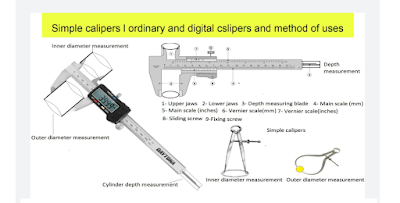
Simple calipers and vernier calipers, method of uses and calculations

Calipers: The calipers are very useful instruments. These instruments are used to measure the diameter of the cylinder, bore, bearing size, ...