Showing posts with label cotton trash. Show all posts

Friday, July 2, 2021

कॉटन फाइबर्स में ट्रैश का विश्लेषण (Trash analysis of cotton fibres)


कॉटन फाइबर्स में ट्रैश का विश्लेषण:

जब कॉटन बॉल्स जिनिंग मशीन से गुजरते हैं, तो कॉटन के बीज कॉटन के रेशों से अलग हो जाते हैं। टूटे पत्ते, धूल भी कुछ हद तक दूर हो जाती  हैं। कुछ कपास के बीज भी जिनिंग  की प्रक्रिया के दौरान टूट जाते हैं। कपास से बीज कोट खत्म नहीं होते हैं। जिनिंग किये हुए   कपास में कई अशुद्धियाँ होती हैं। हम कह सकते हैं कि कपास के रेशों में मौजूद किसी भी प्रकार की अशुद्धियाँ ट्रैश  कहलाती हैं। ऐसी अशुद्धियाँ पौधे की पत्तियाँ, बीज आवरण और धूल आदि हो सकते  हैं।

कपास के रेशों में ट्रैश  की मात्रा प्रतिशत के रूप में व्यक्त की जाती है। कपास की कीमत में ट्रैश  प्रतिशत निर्णायक भूमिका निभाता है। सूत की गुणवत्ता कपास के रेशों में मौजूद ट्रैश  प्रतिशत से भी प्रभावित होती है। कम ट्रैश  प्रतिशत वाला कॉटन  यार्न की बेहतर गुणवत्ता सुनिश्चित करता है। कपास की एक ही किस्म में उच्च ट्रैश  प्रतिशत वाले कपास की तुलना में कम ट्रैश  प्रतिशत कपास की कीमत अधिक होती है।

कपास खरीदने से पहले ट्रैश  प्रतिशत का सटीक विश्लेषण किया जाता है।

ट्रैश  हटाने की प्रक्रिया:

1 - कॉटन लिंट को फीड टेबल पर रखा जाता है।

2 - कॉटन लिंट को फीड टेबल पर रखने से पहले हाथ से  खोला जाता है।

3 - लिंट फीडिंग समान रूप से की जाती है।

4 - एनालाइजर में कॉटन लिंट का काफी पतला फ्लीस  फीड की जाती  है।

5 - ट्रैश  विश्लेषक को  शुरू करने से पहले आधे लिंट को एक समान फ्लीस  के रूप में फीड टेबल पर रखा जाता है। शेष लिंट परीक्षण के दौरान जोड़े जाते हैं।

6 - कचरे के सख्त ढेले और पूरे कपास के बीज को परीक्षण नमूने से मैन्युअल रूप से उठाया जाता है और कचरे से तौला जाता है।

7 - यदि हम  इन हार्ड लुम्प्स  और पूर्ण बीजों को कपास के लिंट के साथ फीड करते  हैं , तो फीड टेबल प्लेट और टेकर-इन वायर पॉइंट क्षतिग्रस्त होने का खतरा बना रहता हैं।

8 - वायु प्रवाह नियंत्रण वाल्व परीक्षण की शुरुआत में खोला जाता है और . प्रत्येक परीक्षण के अंत के बाद यह वाल्व बंद कर दिया जाता है।

कपास के रेशों में ट्रैश  विश्लेषण की विधि:

ट्रैश  विश्लेषण की पूरी विधि नीचे दी गई है:

1 - 100 ग्राम कपास का वजन सही होता है। यह एक शर्ले ट्रैश  विश्लेषक के माध्यम से पास  किया जाता है।

2 - ट्रैश  विश्लेषक.विश्लेषक के माध्यम से कपास की फ्लीस  कम से कम दो बार पारित की जाती हैं।

3 - यदि ट्रैश  में अभी भी बड़ी मात्रा में लिंट  दिखाई देते है , तो ट्रैश  विश्लेषक के माध्यम से ट्रैश  आगे संसाधित किया जाता है।

४- दो-तीन बार  प्रोसेस  करने के बाद मिले कॉटन लिंट्स को एक साथ तौला जाता है ।

5 - अंतिम कार्यवाही के बाद ट्रैश  की मात्रा का वजन किया जाता है।

6 - अब ट्रैश  प्रतिशत और अदृश्य लोस की गणना की जाती है।

7 - आम तौर पर, प्रत्येक 100 ग्राम के दो नमूनों का अलग-अलग विश्लेषण किया जाता है।

8 - दोनों नमूनों के औसत की गणना की जाती है।

ट्रैश की  गणना:

ट्रैश  का विश्लेषण:

एकत्रित दृश्य ट्रैश  बीएस -10 और बीएस - 36 के मैश के आकार की  जाली  के माध्यम से पारित किया जाता है और नीचे के रूप में विश्लेषण किया जाता है:

ट्रैश ओवर मेश 10 - बीज कोट coat

ट्रैश ओवर मेश 36 - पत्तेदार पदार्थ और किट्टी  आदि।

३६ मैश की जाली के नीचे का ट्रैश - धूल आदि।

मशीन की सफाई दक्षता:

सफाई दक्षता मशीन के प्रदर्शन का मूल्यांकन करने में मदद करती है। यदि सफाई दक्षता एक निश्चित स्तर से कम हो जाती है, तो मशीन सेटिंग्स की जाँच की जानी चाहिए। कपास से बीज और पत्ती के कणों, डंठल, रेत और धूल जैसे कचरे के कणों को हटाने को मात्रात्मक रूप से सफाई दक्षता के रूप में व्यक्त किया जाता है जिसका अनुमान नीचे दिया जा सकता है:

ब्लो रूम या कार्ड जैसी मशीन के फीड और डिलीवरी से लगभग 200 ग्राम सैंपल लिया जाता है। इन एकत्रित नमूनों का विश्लेषण ट्रैश  सामग्री के लिए किया जाता है। यह विश्लेषण शर्ले  ट्रैश  विश्लेषक के माध्यम से 100 ग्राम नमूने को संसाधित करके किया जाता है। परिणामी ट्रैश  एकत्र किया जाता है और सही ढंग से तौला जाता है। दो नमूनों का विश्लेषण किया जाता है और औसत ट्रैश  सामग्री की गणना की जाती है।

शर्ले  ट्रैश विश्लेषक की गति और सेटिंग्स:

गति:

सेटिंग्स समायोजन:

फीड प्लेट टू टेकर - इन  = 4/1000 इंच

स्ट्रीमर प्लेट टू टेकर - इन (किनारे में सीसा) = 5/1000 इंच

स्ट्रीमर प्लेट टू टेकर - इन (लीड-ऑफ एज) = 7/1000 इंच

स्ट्रिपिंग नाइफ टू टेकर - इन (निचला किनारा) = 4/1000 इंच

स्ट्रीपिंग नाइफ टू केज  (किनारे में सीसा) = 5/16 इंच

टेकर - इन टू केज  = १३/१६४ से १५/६४ इंच

सेपरेशन शीट टू केज (ऊपरी किनारे) = 1/4 इंच

 डिलीवरी प्लेट टू केज  = १/१६ इंच

Monday, November 16, 2020

COTTON TRASH ANALYSIS BY SHIRLEY TRASH ANALYZER AND CLEANING EFFICIENCY CALCULATION OF A MACHINE

 TRASH ANALYSIS IN COTTON FIBRES:


When the cotton bolls pass through the ginning machine, the cotton seeds get separated from cotton fibres. The broken leaves, dust also get removed up to some extent. Some cotton seeds also get broken during the ginning process. The seed coats do not eliminate from cotton.  The ginned cotton has many impurities in it. We can say that any type of impurities present in cotton fibres is called trash. Such impurities are plant leaves, seed coats, and dust etc. 

The amount of trash in the cotton fibres is expressed in terms of percentage. Trash percentage plays a decisive role in the cotton price. The quality of the yarn is also affected by the trash percentage present in cotton fibres. Low trash percentage ensures a better quality of yarn. Low trash percentage cotton has a high price in comparison to cotton having a high trash percentage in the same cotton variety. 


The trash percentage is analysed accurately before purchasing the cotton. 


Trash elimination process:

1 - The cotton lints are placed on the feed table.

2 - The cotton lints are opened manually by hand before placing them on the feed table.

3 - The lints feeding is done uniformly.

4 - A fairly thin fleece of cotton lints feeds in the analyzer.

5 - Half of the lints are placed on the feed table in the form of a uniform fleece before starting the trash analyzer. The remaining lints are added during a test.

6 - The hard lumps of trash and full cotton seeds are picked up manually from the test samples and are weighed with trash.

7 - If these trash lumps and full seeds are allowed to feed with cotton lints, the feed table plate and taker-in wire points may get damaged.

8 - The airflow control valve is opened at beginning of the test and this valve is closed after the end of each test.

Method of trash analysis in cotton fibres: 

The whole method of trash analysis is given below:

1 - 100 gms of cotton is weighed accurately. It is passed through a Shirley trash analyzer.


2 – The cotton lints are passed a minimum of two times through the trash analyzer. 


3 – If the trash is still found to contain a sizable amount of lints, the trash is further processed through a trash analyzer.


4 -  The lints found after two or three times proceedings are weighed together.


5 – The amount of trash is weighed after the final proceeding.


6 – Now the trash percentage and invisible loss are calculated.


7 – Generally, two samples of 100 gms each are analysed separately.


8 – The average of both samples is calculated.


Trash Calculation:


Analysis of Trash :


The collected visible trash is passed through a wire mesh of mesh size of BS - 10 and BS - 36  and is analysed as below:


Trash over mesh 10  - Seed coats 

Trash over mesh 36  - Leafy matter & kitties etc.

Trash below mesh 36 - Dust etc.


The cleaning efficiency of the machine:


The cleaning efficiency helps to evaluate the performance of a machine. If the cleaning efficiency falls below a certain level, the machine settings need to be checked. The removal of trash particles such as seed and leaf particles, stalks, sand, and dust from cotton is quantitatively expressed as cleaning efficiency which can be estimated as below:


About 200 grams of sample is collected from the feed and delivery of a machine like blow room or card. These collected samples are analysed for trash content. This analysis is carried out by processing a 100 grams of a sample through a Shirley trash analyzer. The resulting Trash is collected and weighed accurately. Two samples are analysed and average trash content is calculated.


Speeds and settings of Shirley trash analyzer:

Speeds :


Settings:

Feed plate to taker - in  = 4/1000 inches

Streamer plate  to taker - in( lead in edge) = 5/1000 inches

Streamer plate  to taker in ( lead-off edge) = 7/ 1000 inches

Stripping knife to taker - in ( bottom edge)  = 4/1000 inches

Stripping knife to a cage ( lead in edge) = 5/16 inches

Taker-in to cage = 13/164 to 15/64 inches

Separation sheet to cage ( top edge) = 1/4 inches

Delivery plate to cage = 1/16 inches

Please click on the below video link to watch the full topic in Hindi:


Monday, July 15, 2019

GINNING OF COTTON FIBRES, POST GINNING TREATMENT

GINNING OF COTTON FIBRES:

What is the main object of ginning? How cotton is ginned? As we know that cotton fibres obtained directly from farms have cotton seeds and many other impurities like dirt, dust and plant left with them. Therefore it is necessary to make cotton fibres free from these impurities. Ginning is the first effort to make cotton fibres free from impurities. “Ginning is a process of separation of cotton fibres from cotton seeds”. The main object of ginning is to remove the cotton fibres from cotton seeds. Secondary dirt, dust and leaves are also removed during ginning. Now, this day ginning of cotton is performed by different types of machines available.

 WORKING OF GINNING MCHINE:


The working of a ginning machine can be described in the following steps:

• Feeding system.

• Drying system.

• Opening system.

• Cleaning system.

• Seeds separation system.

• Lints collection.


• Cotton feeding system:       In the old type of ginning machines cotton arriving in the trailer is fed into the gin through a lattice. Cotton is put onto the lattice. When lattice rotates, it carries the cotton forward with it. The lattice is made of wooden stripes. Cotton is fed in the hopper. Cotton falls onto the lattice automatically due to its gravity. In modern machines, the cotton is directly sucked through a large air suction pipe and is sent into gin. The diameter is of this suction pipe is nearly equal to 16”.

• Drying system:    Moist cotton creates difficulties during the opening, cleaning and seed separating action, so that it demands to remove excess amount of moisture. Due to excess water content cotton fibres grip strongly the cotton seeds. Cotton fibres are passed through the dryer and an extra amount of moisture is removed up to the maximum extent. Now cotton is ready for opening and cleaning.

• Opening system: when cotton passes through rotating spikes and saw rollers, modules are broken. In modern machines, modules are broken by suction pipes.

• Cleaning system:  Cotton now passes through the cleaning cylinder. This cleaning cylinder has six to seven rotating, spiked rollers. These rollers break clumps of cotton. Foreign material leaves, dust remove here and passes through rods or screens for removal. The stick machine uses centrifugal force to remove larger foreign matter such as sticks and burrs while the cotton is held by a fast revolving saw cylinder.

• Seed separation system:   The gin stand uses the teeth of rotating saws to pull the cotton through a series of ginning ribs, which pull the fibres from the seeds which are too large to pass through the ribs. The cleaned seed is then removed from the gin via an “auger system”. The seed is reused for planting or is sent to an oil mill to be further processed into cottonseed oil and cottonseed meal.

• Cotton lints collection system:    The lint cleaners again use “saws and grid bars”, this time to separate “immature seeds” and any remaining foreign matter from the fibres. The bale press then compresses the cotton into bales for storage and shipping. Modern gins can process up to 15 tonnes (33,000 lb) of cotton per hour.

• POST GINNING TREATMENT( BALE FORMATION OF COTTON FIBRES):

After ginning cotton lints are ready to send to market. Since cotton fibre has low specific gravity so that it covers more volume and difficulties are faced during shipping and transportation. Compact packing of cotton is done to minimise the volume. Cotton lints are compressed through a hydraulic press. The compact and desired shape of the cotton bale is obtained. Each bale has 500 lbs. weight. compressed bales are banded and wrapped. Moisture resistant wrapping of the cotton bale is done. Cotton or polypropylene may be used for wrapping, which maintains the proper moisture content of cotton. Proper and good wrapping also helps to keep bales clean during handling, storage and transportation. The particular identification number is given to each bale. “Now cotton is ready to send for marketing”.

 Please click on the below video link to watch the full article in Hindi:


Featured Post

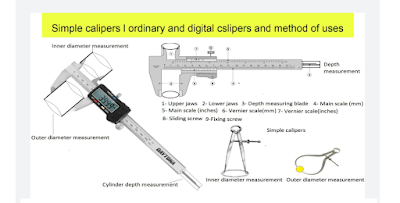
Simple calipers and vernier calipers, method of uses and calculations

Calipers: The calipers are very useful instruments. These instruments are used to measure the diameter of the cylinder, bore, bearing size, ...