Showing posts with label weave. Show all posts
Showing posts with label weave. Show all posts
Thursday, November 19, 2020
Thursday, February 13, 2020
FABRIC ANALYSIS
Please click on the below link to read this full article in Hindi:
कपङे का विश्लेषण ( वोवन फैब्रिक एनालिसिस)
FABRIC ANALYSIS
"Fabric analysis is a process to know about all information required to start manufacturing of a fabric". A weaver is always required to analyze the fabric to be woven in a systematic manner. Weaver should determine all the fabric parameters precisely. "Any negligence during fabric analysis can cause heavy to a very heavy loss to the weaver". The proper and precise analysis of fabric should be conducted before starting the fabric production. The correct procedure of fabric analysis is given below:
Step 1 – identification of warp and weft directions:
The warp and weft directions of the fabric are the most important factors for any weaver. The warp and weft direction in the fabric is identified carefully. The direction of warp and weft is identified as follows:
Dent mark in the fabric:
This is the best way to identify the warp and weft direction in the woven fabric. The fabric is observed under a light source. The dent mark in the grey fabric can be observed clearly through naked eyes. "The dent mark is the air space which gets created due to dent wire of the reed in the fabric". This airspace appears in the fabric at regular intervals of distance ( according to denting order used in the fabric). These dent marks run in the warp direction in the fabric.

Thus the weaver decides the warp direction in the fabric to be woven. The other fabric direction is the weft direction.

Thus the weaver decides the warp direction in the fabric to be woven. The other fabric direction is the weft direction.
If a weaver receives a dyed fabric swatch, then some difficulties come during the identification of warp and weft direction. Difficulties increase more if the fabric has higher warp and weft density in the fabric. In this situation, the dent marks do not appear clearly and continuously. Now the fabric is observed carefully with the help of a magnifying glass. Uneven airspace along the warp direction due to dent wire of the reed can be identified clearly and warp and weft direction can be decided in the fabric.
In some fabrics, one end per dent is passed through the reed. In this type of fabric almost even air gap between two ends results and hence the dent mark does not appear clearly in the fabric. In this kind of situation, the technician needs extra care to see uneven airspace between two adjacent ends. "As soon as fabric comes out of take-up roller, its width tends to shrink. The ends come closer to each other but an uneven end to end airspace generates during shrinkage".
Please note that picks look more straight than an end in the fabric.
Following are the few helping factors in making the decision of the direction of warp and weft of the given fabric swatch:
Ends per inch and picks per inch:
Ends per inch and picks per inch always do not help to identify the warp and weft direction but in maximum fabrics, the ends per inch are kept higher than picks per inch. There are two reasons which insist a weaver to keep EPI higher than PPI. The first reason is the cost of production. Higher PPI causes a direct increase in the weaving cost of the fabric. The second reason is the widthwise shrinkage of the fabric during weaving. In plain fabrics, the ratio of warp and weft in the plain fabric is kept at 55:45. This warp and weft ratio gives the best results in terms of efficiency, productivity, and quality. As the warp and weft ratio starts to become equal, the widthwise fabric shrinkage during weaving increases. This increased shrinkage causes an increased warp breakage rate on both the selvedge sides. The fabric also starts to tear at both the selvedge during weaving. In this way, the weaver can decide the warp and weft direction.
Warp and weft crimp:
The warp crimp and weft crimp also help to decide the warp and weft direction in the fabric swatch. "In any grey fabric, the warp crimp is always more than weft crimp". The weaver can make his decision with the help of warp and weft.
Type of yarn used in the fabric:
In some fabrics, single ply and double plies yarn are used together. One type of yarn is used in warp and another type of yarn is used weft. In this kind of fabric, the weaver always prefers double plies yarn in the warp because the sizing cost does not involve double plies warp yarn.
Step 2 determination of ends per inch and picks per inch:
These parameters can be determined easily with the help of counting glass in most of the fabric. "The counting should be carried out under sufficient light source. The opposite colour background should always be there under the fabric swatch". This opposite colour background under the swatch helps to increase the contrast between airspace and yarn.

A technician becomes able to see and count the EPI and PPI easily. The technician should always count the ends or picks in the complete one inch. Some technicians use half an inch or quarter inch to count ends or picks. This practice does not give an accurate result.

A technician becomes able to see and count the EPI and PPI easily. The technician should always count the ends or picks in the complete one inch. Some technicians use half an inch or quarter inch to count ends or picks. This practice does not give an accurate result.
"In some fabrics like twill and satin having a higher number of threads per square inch, the counting of ends or picks becomes much difficult for the technician. In these kinds of fabrics, the ends per inch and picks per inch are determined accurately with the help of weave repeat".
In some fabrics, the ends or picks are overlapped to each other. In these types of fabric, the one-inch fabric is opened and ends or picks are counted.
Step 3 determination of GSM of the fabric:
The way to determine the GSM of the fabric is adopted as per the availability of the size of the fabric swatch. Sometimes fabric swatch is very small. Cutting of the required circle does not become possible. The GSM of the fabric is found by adopting another method. The methods of determination of GSM are given below:
By using GSM cutter:
if the fabric swatch has sufficient size, then a disc of fabric is cut with the help of a round cutter. This disc of the fabric is weighed on the weighing scale.
if the fabric swatch has sufficient size, then a disc of fabric is cut with the help of a round cutter. This disc of the fabric is weighed on the weighing scale.
GSM = Weight of fabric disc ( grams ) x 100
Now a question may arise why do we multiply the circle weight by 100. This is just because of the area of the fabric circle. We can obtain 100 fabric circles of the same size from one square meter of the fabric. Since we find the weight of one circle, therefore we multiply the circle weight by 100 to find the weight of one square meter of the fabric.


Without using GSM cutter:
if the fabric swatch does not have a suitable size for cutting the disc then the fabric swatch is cut in a rectangle shape. "The length and width of the fabric swatch are measured in centimetres". See below graphic.

Now GSM of the fabric is determined by using the following formula:
if the fabric swatch does not have a suitable size for cutting the disc then the fabric swatch is cut in a rectangle shape. "The length and width of the fabric swatch are measured in centimetres". See below graphic.

Now GSM of the fabric is determined by using the following formula:

To find the GSM without cutting the fabric:
many times your buyer does not allow you to cut the fabric. In this kind of situation, the length, width, and weight of the piece are measured accurately and the GSM of the fabric is calculated with the help of the following formula:

Step 4 determination of warp count and weft count:
The warp and weft count of the fabric should be determined precisely. The warp or weft yarn is taken out from the fabric. The length of the yarn is measured in meters and its weight is measured in grams. Now technician can calculate the count of warp or weft yarn by using the following formula:

Step 5 determination of the degree of twist in the warp and weft yarn and twist direction:
The degree of the twist is a very important parameter of the yarn because the yarn twist directly affects many fabric properties. The yarn twist should be analyzed properly to achieve the same fabric properties as per the sample. TPI and direction of twist both should be checked by a weaver before purchasing the yarn. If a weaver does not have an in-house testing facility, he should arrange the same from outside the laboratory.

Step 6 determination of warp and weft crimp:
Warp crimp:
Warp crimp (regain) is the ratio of the difference between warp length and fabric length to fabric length in the term of % is called warp regain.

Warp crimp (regain) is the ratio of the difference between warp length and fabric length to fabric length in the term of % is called warp regain.


Weft crimp:
It is the ratio of difference (between straightened pick length and fabric width) to fabric width expressed in the term of percentage is called weft crimp. This term may also know as weft regain.

The weft crimp can be obtained by using the below formula:

Step 7 Warp and weft pattern:
If there is multicolour yarn in the warp or weft, then the weaver needs to analyze the warp and weft pattern correctly. Since warp pattern is set in warping, therefore warp pattern analyses require extra care during analyses. A little mistake in warp pattern may be a cause of heavy loss to a weaver. The pattern mistake in the warp cannot be recovered by a weaver in any way. Complete fabric will get rejected.
Weaver should always keep in mind that warp pattern mistake is unrepairable damage in weaving.
Step 8 weave of the fabric:
The weave of the fabric is a very important parameter of fabric. The weave, draft and peg plan of the fabric should be analysed properly and correctly. The draft decides the number of heald shafts to be used in the loom to weave a particular fabric. The peg plan defines the lifting order of heald shafts.


Please note that any mistake during draft analyses requires re-drawing of the warp. It causes productivity loss to the weaver.
Step 9 fabric selvedge:
Sometimes the type of selvedge becomes a very important fabric parameter because it influences the cost of the product up to some extent.
Sometimes the type of selvedge becomes a very important fabric parameter because it influences the cost of the product up to some extent.
Step 10 contents and blend percentage:
A weaver should always conduct a test of the contents of warp and weft yarn. If the yarn is blended with two fibres, the blend % should also be tested.
Please watch the below the video in Hindi about fabric analysis:
You may also be interested in the following articles:
Reed count selection in weaving
Fabric parameters or specifications
Cloth or fabric cover factor calculation
Cotton fibre length evaluation
Fabric GSM calculation
Reed count selection in weaving
Fabric parameters or specifications
Cloth or fabric cover factor calculation
Cotton fibre length evaluation
Fabric GSM calculation
You may also be interested in the below-sponsored links:
Structure and working principle of water-jet loom weft insertion system
Types of rapier weft transfer process, Negative weft transfer and positive weft transfer
Rapier weft insertion system l Types of rapier looms l Weft yarn passage and working principle of rapier weft insertion system
An introduction about shuttleless weaving ( a non conventional weft insertion system)
Parallel picking or parallel weft insertion systems
Structure and working principle of water-jet loom weft insertion system
Structure and working principle of projectile loom weft insertion system
Types of rapier weft transfer process, Negative weft transfer and positive weft transfer
Rapier weft insertion system l Types of rapier looms l Weft yarn passage and working principle of rapier weft insertion system
An introduction about shuttleless weaving ( a non conventional weft insertion system)
Parallel picking or parallel weft insertion systems
Structure and working principle of water-jet loom weft insertion system
Structure and working principle of projectile loom weft insertion system
Sunday, April 28, 2019
WOVEN FABRIC WEAVE OR DESIGN ANALYSIS
WOVEN FABRIC WEAVE OR DESIGN ANALYSIS:
The analysis of the design or weave of the woven fabric is a very important job. It needs a very high degree of care ness and preciseness. Since we know that the woven fabric consists of two series of yarn. The threads running in the longitudinal direction is called warp threads or ends. The yarn running in the transverse direction is called weft threads or pick. In the woven fabric, the ends and picks intersect with one another at a right angle. Before knowing about weave or design analysis, it is very important to know about the following terms.
WEAVE:
The order of interlacement of ends and picks in the fabric is called a weave of the fabric.
DRAFT:
The order of drawing the ends through the eye of Heald wire of Heald shafts and the dent of the reed is called a draft.
PEG PLAN:
The order of the lifting of the Heald shafts according to weave is called peg plan.
HOW TO ANALYSE THE WEAVE OF THE FABRIC:
The analysis of the weave of a fabric is a very difficult job. If we start weave analysis systematically, it gets easy. Before describing the procedure of weave or design analysis, we will tell you about basic weaves.
Plain weave: the repeat of plain weave is possible in minimum of two ends and two picks. Every end changes the up and down position regularly in the fabric.

Plain weave: the repeat of plain weave is possible in a minimum of two ends and two picks. Every end changes the up and down position regularly in the fabric.
Twill weave: the twill weave is possible with a minimum of three ends and three picks. The diagonal lines appear in this weave.
Satin weave: this weave is possible with a minimum of 5 ends and 5 picks. The lustre of satin weave is very good.
ANALYSIS OF WEAVE OR DESIGN OF THE FABRIC, DRAFT AND PEG PLAN:
The analysis of the weave of a fabric is a very difficult job. If we start weave analysis systematically, it becomes easy. Before describing the procedure of weave or design analysis, we will tell you about basic weaves.
Plain weave: the repeat of plain weave is possible in a minimum of two ends and two picks. Every end changes the up and down position regularly in the fabric.
Twill weave: the twill weave is possible with a minimum of three ends and three picks. The diagonal lines appear in this weave.
Satin weave: this weave is possible with a minimum of 5 ends and 5 picks. The lustre of satin weave is very good.
The weave analysis of any given swath is carried out in various steps.
In the first step of weave analysis, the correct repeat of the weave is identified and marked. The number of ends per repeat and the number of picks per repeat is found out with the help of counting glass.
In the second step, the up and down movement of ends and picks are read and are noted on a graph paper. The up and down movement of anyone end is noted on a graph paper. Now, this end is taken out from the fabric swatch. Now the up and down movement of the next end is noted. This process is repeated till the completion of the reading of the up and down movement of the full weave repeat.
In the next step, the draft and peg plan are noted on the graph paper. The systematic way of weave or design analysis is given below:

Please don't forget to share this article with your friends if you find this information useful for you. Your comments are the most welcome to improve further this article.
Please click on the below video link to watch the full article in Hindi:
You may also be interested in the following articles:
Sunday, October 14, 2018
General terms to be used in textile
TEXTILES
Textile is a very broad subject(today a field of the industry). It is directly linked with human civilization. It is much more difficult to define the textile in a few words or lines exactly. Some definitions are being given below:
“As a layman, we can say that textile is a material, which is used for covering, binding, tying and packaging purpose”
or
“Textile is a material which consists of textile fibres such as natural,re-generated or man-made fibres and manufactures through some mechanical, chemical and or manual processes”
USES OF TEXTILES:
“When textiles were invented, its use was to cover the body and to protect the human body from the atmosphere only”. As human civilization developed, human needs increased along with human development. People learned about various uses of textiles in their life.
Some common uses of textiles are given below:
· Dressmaking.
· Carry bags
· Floorcovering
· Car seating, tire cord(automobile industry)
· Medical textiles
· Geotextiles
· Aeronautical industry( air balloons, parachutes,)
· Air filter, water filter, oil filter
· Home furnishing( sheets, curtains, table linen, kitchen linen etc.)
· Industrial cloths ( felt)
· Tents
· Umbrellas
· Toys
· Fireproofing
· Satellites
· Electrical industry( for insulation)
· Strings
· Bulletproof jackets
· Agro textiles
· footwear industry.
Except for these uses, there may be many more uses of textile products in human life.
FIBRE: DEFINITION:
“An element made of any material having hundred or more times longer in comparison to its diameter called fibre”.
TEXTILE FIBRE : DEFINITION:
“A fibre having the length to diameter ratio of more than 100 and some basic characteristics is called textile fibre”. These basic characteristics of a textile fibre are given below:
· Evenness.
· Required strength.
· Elongation and elasticity
· Cohesive force to bind the fibres to each other.
· Durability.
· Flexibility.
· Strength.
· Fineness.
· Extensibility.
· Softness.
PROPERTIES OF TEXTILE FIBRES:
End use of textile fibre is decided by taking into consideration of its properties. There are some characteristics that are essential and most important for any textile fibre. “The essential properties of a fibre to make it textile fibre are known as primary properties and those properties which may increase its utility, desirability, and value are called the secondary properties of a textile fibre”
PRIMARY PROPERTIES OF A TEXTILE FIBRE:
Some primary properties of a textile fibre are given below:
· Evenness of a fibre
· Fibre strength
· Fineness of a fibre or micronaire value
· Specific gravity or density
· Tenacity of a fibre
· Elongation or elasticity
· Cohesiveness
YARN:
“a continuous strand of twisted textile fibres is called yarn”. The yarn is used in weaving and knitting.
Thread:
“a continuous strand of two or more plies of yarn, in which plies of yarns are twisted together is known as thread”. It is used in needlework and the weaving of cloth.
Difference between yarn and thread:
Every thread is made of yarn. Therefore it may be referred to as yarn. But yarn cannot be referred to as a thread.
The main differences between yarn and thread are given below:
1- yarn may consist of one or more plies in it while thread always consists of more than one ply.
2-yarn is normally used in woven or knitted fabrics while the thread is mostly used in sewing and needlework like embroidery or crochet work.
3-yarn cannot be referred to as the thread but the thread can be referred to as yarn.
4-yarn is usually sold in bigger packages while the thread is usually sold in smaller packages.
5- yarn has lesser elongation than thread.
6- yarn is produced by the spinning of textile fibres while thread is produced by twisting two or more plies of yarn together.
YARN PARAMETERS:
Appearance:
The appearance of yarn is judged visually by the naked eyes. It also plays a decisive role in the evaluation of yarn quality. An appearance board winder is used to see the appearance of yarn. This board has black colour on one side and white colour in another side. The yarn is wrapped onto the board with the help of board winding machine in such a way that yarn coils should not be overlapped to each other. Now various type of defects is observed.
The linear density of yarn:
The linear density of yarn expresses the fineness of yarn. It is a number that indicates the length per unit weight or weight per unit length of yarn. There are two systems of expressing linear density or fineness of yarn.
· Direct system:
In this system, length remains constant and weight varies according to the fineness of yarn. Tex, denier are examples of this system.
· Indirect system:
In this system, weight remains constant and length varies according to the fineness of yarn. Ne, Nm is an example of an indirect system.
The strength of yarn:
It is the most important parameter of yarn. The strength of yarn is the force required to break the yarn. There are two methods used to observe the strength.
· Bundle strength
· Single end strength
Bundle strength:
This method is used in spun yarn only. Bundle strength does not give the correct value of yarn strength but it helps to compare two yarns of the same count. If we have to select one yarn between two same counts of yarn. Bundle strength is very useful.
Single-end strength:
In this method, the exact strength of the yarn is measured. It expresses the force required to break the single strand of yarn. It is usually measured in grams or centi of newton. The elongation percentage at breaking is also recorded in this test. The elongation of yarn plays an important role during weaving. If the yarn has no elongation, it is almost impossible to weave the fabric with this yarn. Two very important and useful parameters are obtained with the help of this test:
RKM. – the strength of yarn in terms of grams/tex.
Elongation@break – in term of percentage(%).
Yarn twist:
The yarn twist is a very important parameter. It seriously affects the performance of yarn. If the yarn has less twist than standard then fibre slippage may occur. The yarn having a low twist possesses low strength. There may be a chance of pilling formation due to low twist. It will give a soft feel and touch. If the yarn has more twist than standard. The yarn will show good strength but it will give a rough feel and touch. There may be a chance of snarling too. The amount of twist is expressed in turns/inch.
· T.P.I. – turns per inch In the yarn.
Type of twist: it shows the direction of the twist. There are two types of twist direction possible which are:
· S-twist:
The clockwise twist of yarn is called s-twist. The slope of spirals of yarn is similar to the middle part of the English letter “S”.
· Z-twist:
The anti-clockwise twist of yarn is called a z-twist. The slope of spirals of yarn is similar to the middle part of the English letter “Z”.
Yarn evenness:
Unevenness: Variation in the linear density of a continuous strand or of a portion of a strand.
The evenness of yarn is measured by the Uster evenness tester. In this test, one kilometer of yarn is passed through this apparatus. The unevenness of the yarn (U%) is observed. The following parameters are recorded in this test:
· Unevenness (%)
· Thick places per kilometer of yarn
· Thin places per kilometer of yarn
Neps per kilometer of yarn.
YARN PROPERTIES:
A spun yarn posses the following important properties:
· Fineness of yarn
· Evenness of yarn
· Degree of twist
· Twist multiplier of yarn
· Strength of yarn
· Tenacity of yarn
· Elongation at break
· Degree of hairiness of yarn
· Diameter of yarn
WOVEN FABRIC:
The fabric results after the interlacement of two series of yarn. The two different yarns are interlaced to each other at a right angle. There two types of yarn lie in the fabric. The yarn running in a longitudinal (vertical or along the length of the fabric) direction is called warp. The yarn running in a transverse (horizontal or along the width of the fabric) direction is called weft or filling. The warp and weft interlace each other in the fabric according to design. The design pattern is referred to as weave.
FABRIC PARAMETERS:
The main parameters of the fabric are given below:
· Warp count
· Weft count
· Ends per unit length
· Picks per unit length
· Width of the fabric
· Weight per square meter or yard
· Warp crimp
· Weft crimp
· Weave
· Denting order
· Type of selvedge
· Warp pattern
· Weft pattern
· Other special effects
Warp count: the yarn running in the longitudinal or vertical direction is called warp. The yarn count used in the warp yarn is referred to as warp count.
Weft count: the transverse or horizontal yarn in the fabric is called weft or filling. The yarn count used in the weft yarn is referred to as weft count.
Ends per unit length: the vertical or longitudinal threads per unit length in the fabric are referred to as ends per unit length. It is measured in ends per inch or centimeter.
Picks per unit length: the horizontal or transverse threads per unit length in the fabric are referred as picks per unit length. It is measured in picks per inch or centimeter.
Fabric width: It is measured in inches, centimeters, or meters, etc. distance between both selvedges of the fabric is called fabric width.
Weight per square meter or yard: it is measured in grams, ounces, pounds, etc. This term is widely used to refer to the quality of the fabric. GSM or GSY terms are used to denote the weight of the fabric.
Warp crimp: it is expressed in the term of percentage. When the fabric is woven, the warp threads are shrunk because of the interlacing of the weft. If we weave one meter of fabric, more than one meter of warp length is required to weave this fabric. The difference between warp length and fabric length expressed in the tern of percentage is called warp crimp.
Weft crimp: it is expressed in the term of percentage. The difference between straightened weft length and fabric width expressed in the term of percentage is called weft crimp.
Weave: the sequence of interlacement of warp and weft is called weave.
Denting order: the sequence of passing the ends through the dents of the reed is called denting order.
Type of selvedges: in today’s weaving technology, many types of selvedges are possible. Therefore it is necessary to identify the type of selvedge in the fabric and mention it if required.
Warp pattern: when the multi-color (stipe or check fabric) warp is used to weave the fabric, the sequence of colours in the warp is determined.
Weft pattern: in the multi-colour weft fabric, the sequence of colours in the weft of the fabrics is called weft pattern.
Other special effects: many special effects are created in the fabric by using different techniques. Pleated and sheer sucker fabrics are produced by using two different series of warp. Variable pick density can be used in the fabric also. Special effects can be produced by making take-up motion inoperative.
FABRIC PROPERTIES:
Important properties of the fabric are given below:
· Appearance.
· Lustre.
· Handle.
· Dimensional stability.
· Tensile strength.
· Tearing strength.
· Elongation
· Elasticity.
· Bursting strength.
· Crease resistance.
· Air permeability.
· Abrasion resistance.
· Pilling.
· Drape coefficient.
· Moisture absorbency.
· Water Repellency.
· Thermal conductivity
· Light permeability
· Breathability
· Washability.
· Coefficient of friction
· Sewed seam strength
· Sewed seam slippage
· Flammability
Fabric appearance: it is the property related to the surface of the fabric. Generally, the visual property of the fabric is termed fabric appearance. Fabric appearance is directly associated with the structure, material used, reflectance properties, and surface morphology.
Lustre of the fabric: when a person sees the surface of two different fabrics with the naked eye, he observes that there is a difference between the amounts of light reflected by both fabric surfaces. Thus we can say that “the amount of light reflected by fabric surface judged with naked eyes is termed as fabric luster”. It is also called the sheen of the fabric. It depends upon structure, type of yarn, type of material, and weaves used.
The handle of the fabric: “Fabric handle tells about the degree of softness, stiffness, hardness, smoothness or roughness of the fabric”. It is judged by touching the fabric by hand simply. Fabric handle varies according to the type of material used, fabric construction, weight per square unit of the fabric and weave, etc.
Dimensional stability:
The ability of a fabric to retain its original dimensions or shape while being used for its intended purpose as expressed in the term of percentage is called the dimensional stability of the fabric. It is determined in warp direction (length) and weft direction (width) separately. It is greatly influenced by yarn count and construction used, type of material, yarn twist, weave and grams per square meter of the fabric, etc.
The tensile strength of fabric: The maximum stretching force (load) hold by the fabric without breaking, when the force (stretching load) being applied to the fabric is known as the tensile strength of the fabric. It is measured in newton per square centimeter or pounds per square inch. It depends upon the yarn strength, material type or thread count of the fabric, etc. The tensile strength of the fabric is determined separately in the warp and weft direction.
Tearing strength of fabric: The term tearing strength of the fabric is referred to as “the force required to initiate the tearing of the fabric from the split in the center of the specimen or continue tearing of the fabric”. It is also termed tearing resistance. It is measured in pounds, grams, or Newton, etc. It is determined for warp and weft direction separately. It varies according to the yarn used, thread count and type of material, etc.
Bursting strength: when the fabric is subjected to pressure, the fabric is stretched in all possible directions at the same time. When the applied pressure is increased gradually, the fabric begins to burst after a pressure limit. This pressure limit is called bursting strength. Thus we can say that “the pressure required to burst the fabric surface is termed as bursting strength of fabric”. It is measured in pounds per inch2. The type of yarn, construction of fabric, and material type influence the bursting strength of fabric greatly.
Crease resistance of fabric: “The ability of the fabric to prevent the formation of wrinkles or creases on the surface of the fabric during various uses or processes is called crease resistance of the fabric”. It greatly depends upon the type of material to be used in the fabric. The crease resistance of the fabric is expressed in the term of the crease recovery angle.
The air permeability of fabric: “The volume of air passed per second through per unit area of the fabric is called air permeability of fabric”. It is expressed in cubic centimeters per second per square centimeter. It depends upon the count of yarn, construction of fabric, and weight per square unit of the fabric.
Abrasion resistance of fabric: The degree to which a fabric is able to withstand surface wear, rubbing, chafing, and other friction forces. Abrasion resistance allows a fabric surface to resist wear. Fabrics which are abrasion resistant are useful for situations in which mechanical wearing and damage can occur.
Fabric pilling: The ball formation on the fabric surface during fabric wear due to the entanglement of protruding fibers is termed pilling. These balls on the fabric surface form due to rubbing. The pilling property of the fabric is majorly affected by yarn quality, type of material, and degree of twist of yarn to be used in the fabric.
Drape coefficient of the fabric: it is a very important characteristic of the fabric. It prescribes the fabric deformation by gravity when it is allowed to hang under its own weight. It is the ratio of the difference between the area of the draped sample and the supporting disk to the difference between the area of the specimen and the supporting disk. Its value is always less than one. The low value of the drape coefficient shows good draping properties of the fabric. It depends upon the weight per square unit of fabric, construction of the fabric, type of material, etc.
Moisture absorbency: The ability of a fabric to take in moisture. Absorbency is a very important property, which affects many other characteristics such as skin comfort, static build-up, shrinkage, stain removal, water repellency, and wrinkle recovery.
Water repellency: The water repellency of the fabric is the ability to resist the fabric to absorb moisture. It depends upon the compactness of the fabric, construction, and material used in the fabric, etc.
The thermal conductivity of the fabric: The ability of the fabric to transfer heat from a higher temperature to a lower temperature surface by conduction is termed the thermal conductivity of the fabric. The heat energy transferred per second per unit surface area of the fabric, divided by the temperature difference is called the thermal conductivity of the fabric. It is measured in watts per second per square meter. It mainly depends upon the weight per square unit, the type of material of the fabric.
Light permeability of the fabric: The ability of the fabric to allow the degree of light to pass through the fabric is called the light permeability of the fabric. It depends upon the construction of the fabric, the type of material of the fabric, etc.
The breathability of fabric: Moisture vapor transmission rate is a measure of the passage of water vapor through the fabric. It is termed as the breathability of the fabric. it contributes greater comfort for wearers of clothing for outdoor activity. It is measured in grams/metre²/day. It depends upon the fabric construction, weight per square unit, and type of material used in the fabric.
Washability of fabric: The ability of fabric to wash manually or mechanically with water and soap without the change in colour, dimensional stability, and appearance of the fabric is called the washability of fabric. It depends upon the yarn quality, the type of material used, and the quality of dyeing, etc.
The coefficient of friction: It tells about the frictional characteristic of the fabric surface. When a block covered with fabric is kept over an inclined surface covered with the same fabric surface, at a certain degree of angle the block starts to slide due to its own weight. The tangent of this angle is called the coefficient of friction of fabric. The coefficient of friction varies according to the type of yarn, type of material, weave of the fabric, and finish used in the fabric.
Sewed seam strength: when the two fabrics join together it needs similar strength at the point of joint as the original fabric. The seam strength of fabric ensures the durability of a garment and other products. Seam strength depends upon the construction of the fabric, weave, type of material, etc.
Sewed seam slippage: it is a very important property of the fabric. It ensures to prevent of slippage of seams during wear, abrasion, and stress in the garment. When the stitching needle penetrates the fabric, it does not rupture the yarn of the fabric due to the mobility of yarn in the fabric. If the yarn has a lack of yarn mobility in the fabric, the stitching needle does rupture the yarn which causes sewed seam slippage in the garments. It is greatly influenced by fiber content, yarn construction, tightness, and thread count. The fabric construction (EPI, PPI, count, weave type) plays a major role in the performance of the seam. The cover factor increases with the increase in EPI and PPI, thus resulting in greater fabric strength, the greater the resistance to fabric and seam breakage.
Flammability: This is a very important characteristic of the fabric. Flammability of the fabric is the characteristic of the fabric that pertains to its relative ease of ignition and relative ability to sustain combustion. It depends upon the type of material used in the fabric.
Subscribe to:
Posts (Atom)
Featured Post
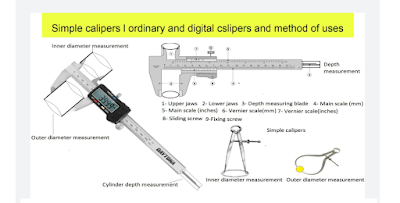
Simple calipers and vernier calipers, method of uses and calculations
Calipers: The calipers are very useful instruments. These instruments are used to measure the diameter of the cylinder, bore, bearing size, ...
-
 If you are searching for genuine hand woven, sustainable, and eco – friendly warm shawls, stoles, and scarves, the Himalayan weavers is off...
 -
 please click on the below link to read this article in Hindi यार्न की परिभाषा और यार्न के विभिन्न प्रकार या यार्न का वर्गीकरण VARIOUS TYPE...
 -
 CARDING: The carding is the second process of spinning which converts fed material (lap) into the uniform strand of fibres called “...
 -
 please click on the below link to read this article in Hindi एक सिस्टम से दूसरे सिस्टम में यार्न काउंट का रूपांतरण CONVERSION OF YARN COUN...